
Espresso Machines
High pressure and high heat make espresso machines sensitive to scale, worn seals and pump trouble.
Typical complaints: weak or slow shots, low pressure, steam that fades, leaks around the brew head.
Weak coffee, no brew at all, a puddle by the counter: when your coffee machine misbehaves, the whole morning feels it. Salt Life Appliance Repair applies 25+ years of hands-on experience to espresso machines, coffee makers and built-in systems in homes and workplaces across Boca Raton, plus installation for new units.
Coffee machines usually fail in small, annoying ways long before they quit completely. The brew takes longer, the cup comes out lukewarm, the grinder rattles, or water collects around the base. Each clue narrows down which part is struggling, and that is where our work begins. Inside every machine, water has to be stored, heated, pushed through coffee and delivered at a steady temperature. A weak link anywhere in that chain, whether a heating element, pump, valve, brewing unit or electrical connection, changes what ends up in your cup. South Florida's hard water adds to the challenge. Minerals leave scale inside heaters and narrow passages, so even well-kept machines can slow down, run cooler or clog.
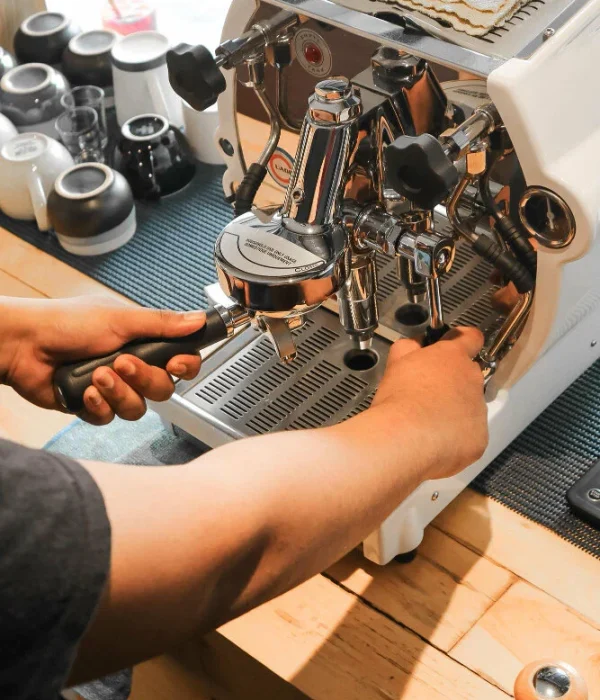
Different machines fail in different ways. Here is what we typically see with each type.
High pressure and high heat make espresso machines sensitive to scale, worn seals and pump trouble.
Typical complaints: weak or slow shots, low pressure, steam that fades, leaks around the brew head.
Drip machines tend to fail through clogged water paths, weak heating or a tired pump or valve.
Typical complaints: slow brewing, lukewarm coffee, overflow, or no brew at all.
Cabinet-mounted and plumbed systems add water lines, drains and tight spaces, so installation quality matters as much as repair skill.
Typical complaints: leaks at connections, error messages, inconsistent output.
Grinders, milk systems and electronic controls add more parts that can wear out or jam.
Typical complaints: grinder noise or jams, incomplete cycles, error codes, brewing interruptions.
Six components do most of the work, and each one gives warning signs before it fails.
Job: stores and conditions the water.
Warning signs: slow flow, cloudy or off-tasting coffee.
Job: brings water to brewing temperature.
Warning signs: lukewarm coffee, long waits, water that never gets properly hot.
Job: moves water through the machine.
Warning signs: loud buzzing, weak flow, dry sputtering.
Job: direct water where it needs to go.
Warning signs: drips, leaks, water coming out of the wrong place.
Job: where water meets coffee.
Warning signs: weak or uneven extraction, clogged outlets, interrupted cycles.
Job: prepare the beans and run the cycle.
Warning signs: grinding noises, error messages, a display or buttons that stop responding.
See what is probably happening and what you can safely try before calling. If a step does not help, or water is near the machine’s electrical parts, stop and call.
| Symptom | Likely culprits | Safe first step |
|---|---|---|
| Will not turn on | Power supply, cord or outlet, switch, control board | Try a different outlet and check the breaker. Do not open the casing. |
| Powers on but will not brew | Empty or poorly seated reservoir, clogged water path, pump or valve fault | Refill and reseat the reservoir, then run a cleaning or descaling cycle per the manual. |
| Weak or watery coffee | Scale, reduced water flow, low brewing temperature, worn brewing unit | Check your grind and dose, then descale. |
| Coffee not hot enough | Heating element, temperature sensor, scale buildup | Descale and run it again. If it is still cool, stop and book service. |
| Leaking water | Cracked reservoir, worn seals or gaskets, loose hose or fitting, overflowing drip tray | Unplug the machine and empty the drip tray. Do not run it until it has been inspected. |
| Slow brewing or stopping mid-cycle | Scale, partial clog, failing pump, controls fault | Clean the removable parts and descale per the manual. |
| Loud pump or grinder noise | Empty reservoir, worn pump, foreign object in the grinder, loose parts | Make sure the reservoir is full. Keep fingers and tools out of the grinder. |
| Error codes or frozen display | Sensor fault, controls issue, scale | Power the machine off and on once, and note the code to tell us. |
Scale is among the most frequent causes of slow, cool or weak coffee, and South Florida’s hard water speeds it up. A simple routine heads off many repairs. Your manual always has the final word on products and intervals.
Avoid household vinegar unless your manual says it is safe. The wrong descaler can damage seals and leave a lingering taste.
Dump leftover water, rinse the reservoir and wipe the drip tray.
Carafe, filter basket, portafilter and milk parts, as the manual directs.
If your model uses one, follow the manufacturer’s replacement schedule.
Many households need it every one to three months. Hard water and heavy use mean more often.
Choose the descaler and cleaners your manufacturer recommends for your model.
Installation
Upgrading a kitchen, replacing an old unit or adding a coffee station at work? Setup affects performance and lifespan. Positioning, electrical connections, water supply and drainage all need to follow the requirements for your specific model.
A level surface or correctly sized cabinet opening, with room for ventilation and for filling, cleaning and servicing.
The right outlet or circuit and, for plumbed models, a properly connected water supply and drain.
We check the connections for leaks and test the machine through a brew cycle.
A tired coffee machine can often be saved. These signals usually tell the story.
After inspecting your machine, we tell you honestly which side it falls on.
With 25+ years of fixing household and workplace appliances, we have met most failure patterns before.
We confirm what has actually failed before recommending anything, so every suggestion has a reason behind it.
You get a candid view of whether your machine is worth fixing, not a push toward the biggest job.
New machines go in following the maker’s own installation guide for that model.
Whether it is a kitchen counter or a break room, we work around how the machine is actually used.
We walk you through the diagnosis and what it means for you in everyday language. See what local customers say on our reviews page.
Tell us the brand, the model and what it is doing. We will take it from there.
Common Questions
When a machine powers on but will not brew, the usual suspects are an empty or poorly seated water reservoir, scale blocking the water path, or a failing pump or valve. Refill and reseat the reservoir, then run a descaling cycle as your manual directs. If nothing comes through after that, stop and have the machine inspected rather than forcing it.
Weak coffee often comes from reduced water flow, scale buildup, brewing water that is not hot enough, or a worn brewing unit. Check your grind and coffee dose first, then descale. If the cup is still thin, the machine may be underperforming and worth a closer look.
Leaks usually trace back to a cracked reservoir, worn seals or gaskets, a loose hose or fitting, or an overflowing drip tray. Unplug the machine, empty the tray and keep it off until it has been inspected, especially if water is near the cord or outlet.
Lukewarm coffee points to a heating element or temperature sensor problem, or to scale insulating the heater. Descale the machine as your manual describes. If the coffee is still cool, have the machine checked, because a struggling heater tends to get worse over time.
Follow your manufacturer’s interval. Many households descale every one to three months, and heavy daily use or hard water, which is common in South Florida, calls for the shorter end. Slow brewing, cooler coffee or a clogged outlet are signs it is overdue.
Check your manual first. Some manufacturers allow vinegar and many advise against it, because it can affect rubber seals and leave a lingering taste. They recommend their own approved descaler instead. Using the wrong product can create new problems.
A buzzing or rattling pump often means the reservoir is empty or air is trapped in the line, while grinding noises can come from a foreign object in the grinder or worn parts. Make sure the reservoir is full, keep fingers and tools away from the grinder, and have the machine inspected if the noise continues.
The answer turns on which part failed, the machine’s overall condition and what buying a new one would run. A single failed part on an otherwise sound machine is often worth repairing. Repeated failures, heavy scale damage or a repair price close to a new machine’s usually point toward replacing it.
We service espresso machines, automatic coffee makers, built-in coffee systems and other specialty models for homes and businesses in Boca Raton, FL. Because models vary, tell us the brand and model when you get in touch on (561) 866-5598, and we will confirm we can help.
Installation covers positioning the machine, making the electrical connections and, for plumbed models, the water supply, all following the manufacturer’s requirements for your specific unit. We then check the connections for leaks and test the machine. Have the model number, the manual and the planned location ready.