
Fill
Water enters through the supply line and filter and settles in the reservoir.
When it fails: a closed valve, clogged filter or weak inlet valve starves the machine, leaving ice thin, hollow or missing.
Ice that stops coming, turns cloudy or ends up on your floor is more than an annoyance. Salt Life Appliance Repair brings 25+ years of appliance service to ice machines in homes and businesses throughout Boca Raton: troubleshooting and repair, plus installation and replacement when a new unit is the better answer.
From the outside, an ice machine looks simple: water goes in and ice comes out. Inside, a short chain of parts has to cooperate every few minutes, all day long. When one link weakens, the machine rarely stops dead. It slows down, gets noisy, drips, or starts turning out ice that looks or tastes wrong. South Florida adds its own strain. Warm kitchens, humid air, mineral-heavy water and, near the coast, salt air all push these machines harder than the manual assumes. That is why we begin with a conversation about what you have noticed, then test the machine from the water line to the bin. You get a clear explanation of what failed and what your choices are, whether that means a repair, a replaced part or a new unit.
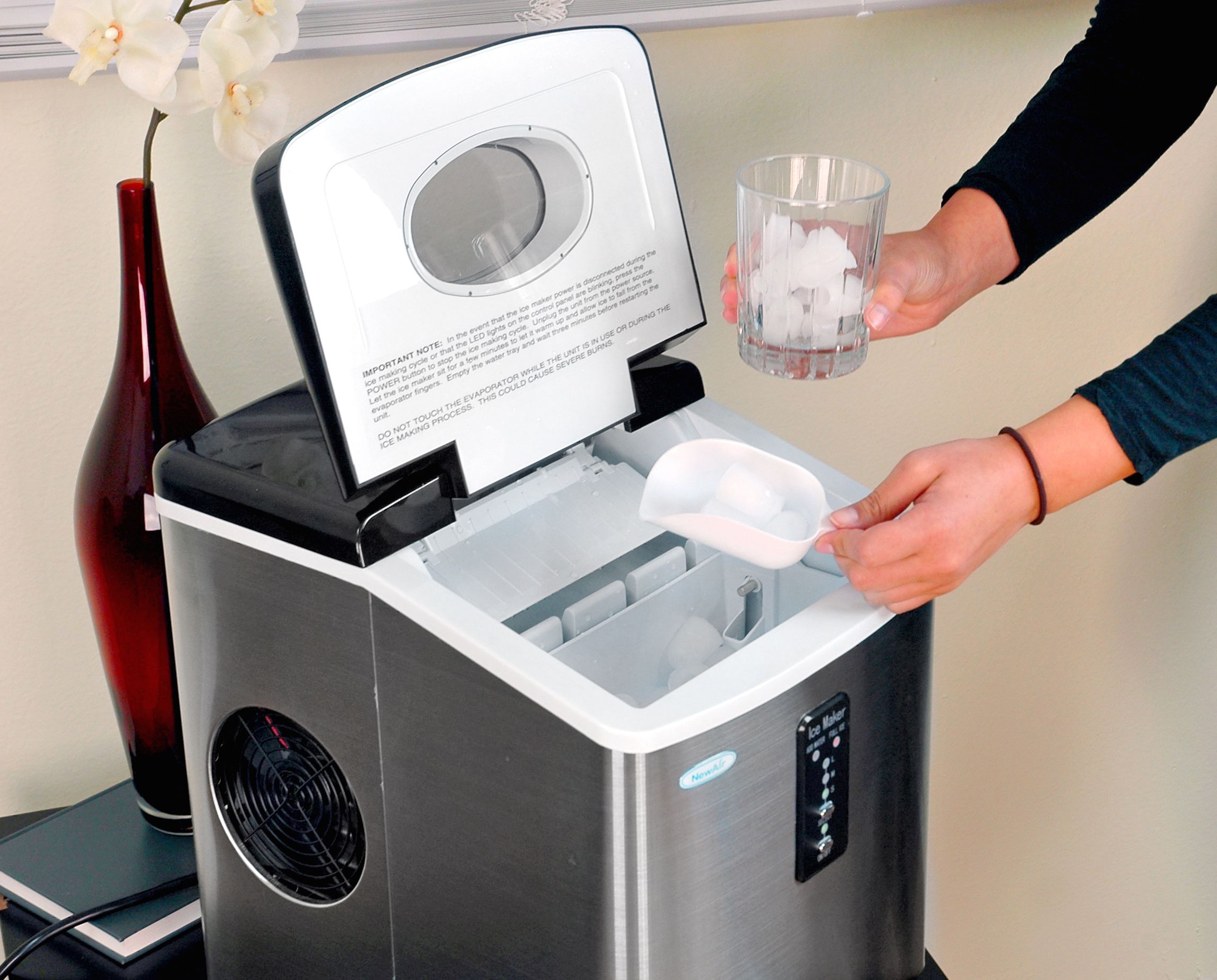
Knowing the cycle makes symptoms easier to read. In a typical cube machine, production repeats in four stages.
Water enters through the supply line and filter and settles in the reservoir.
When it fails: a closed valve, clogged filter or weak inlet valve starves the machine, leaving ice thin, hollow or missing.
Refrigeration chills a plate or mold while water circulates over it and builds up ice.
When it fails: scale, a dirty condenser or poor airflow slows the freeze, so cycles stretch out and output drops.
A brief warming phase loosens the ice so it drops into the bin.
When it fails: ice that stays stuck, or arrives in clumps and fragments, can point to a problem at this stage.
Sensors detect a full bin and pause production, while meltwater drains away.
When it fails: a blocked drain or faulty sensor can cause melting, clumping, overflow or a machine that will not restart.
Find what you are noticing, then see where in the cycle it usually starts. Treat this as a starting point rather than a diagnosis, because several causes can share one symptom.
| What you notice | Where it often starts | Common suspects |
|---|---|---|
| No ice at all | Fill or freeze | Closed supply valve, clogged filter, failing inlet valve, refrigeration or control fault |
| Ice, but far less than before | Freeze | Scale on the ice-forming surface, restricted water, dirty condenser, hot surroundings |
| Hollow, thin or ragged ice | Fill | Low water flow, partial blockage, scale |
| Cloudy ice or a bad taste | Water quality | Aged filter, high mineral content, a machine overdue for cleaning |
| Puddle under or beside the unit | Fill or hold | Loose fitting, blocked drain, overflow, internal leak |
| Ice melting or clumping in the bin | Hold | Drain blockage, warm room, worn door seal, failing sensor |
| New grinding, rattling or humming | Mechanical parts | Fan, pump or motor wear, loose mounts |
| Dead, or cutting out mid-cycle | Power or controls | Supply or breaker problem, control board, safety switch |
An ice machine performs the way it is installed. Six details decide most of it.
Choose a spot with room to service the machine and a floor that can carry its weight. Outdoor kitchens and lanais deserve extra thought, since heat, humidity and salt air are harder on equipment there.
A dedicated supply with a filter suited to your water protects ice quality and keeps scale in check.
Most machines need a proper drain for meltwater and rinse water. Poor slope or a shared line that backs up leads to leaks and odors.
The machine should have the circuit and outlet its manufacturer specifies, not an overloaded line shared with other equipment.
Air-cooled units need breathing room around their vents. A boxed-in machine runs hot, makes less ice and wears out sooner.
Rated output assumes mild conditions. Size the machine for your busiest hours, then allow some margin for a hot room.
Whether we are setting up a new machine or swapping out an old one, we connect the lines, position the unit, check for leaks and run it through a cycle before the job is done.
An aging ice machine is not automatically a lost cause. Work through these questions, or let us work through them with you after an inspection.
A clogged filter, a stuck valve or a worn pump is a contained problem, and fixing it usually restores normal output. Several problems at once usually mean a tired machine.
If the machine keeps up when it works, repair makes sense. If you have outgrown it, even a perfect repair leaves you short on ice.
When fixing the machine would cost close to a replacement, the new unit usually earns its price through reliability.
After the inspection we compare your options side by side, so the decision is yours.
Ice is food, so a machine cleaned on time makes better ice and breaks down less. Treat this as a sensible baseline, and let your manufacturer’s manual set the exact schedule for your model.
| How often | What to do | What it protects |
|---|---|---|
| Daily | Use a clean, dedicated scoop, keep the bin door closed and never store anything in the bin | Keeps contaminants out of the ice |
| Monthly | Look over the vents and the space around the unit, and check fittings and the drain for dampness | Cooling performance, and early warning of leaks |
| On the filter’s schedule | Replace the water filter | Water flow, ice clarity and taste |
| Twice a year, or as the manual directs | Clean and sanitize the machine using the approved products and steps | Clears scale and slimy film before they spread |
| Whenever output changes | Note what is different and call before it becomes a breakdown | Simpler fixes and less downtime |
Use only the cleaner your manufacturer approves. The wrong chemical can damage internal parts. Never open electrical panels or touch the sealed refrigeration system yourself.
No guesswork, no surprises about what is wrong. Here is how a service request moves from your first call to a working machine.
Call or use the form. Share the machine’s type, brand and model if you can, plus what you have noticed.
Water supply, cooling, drainage, controls and mechanical parts are all checked against your symptoms.
We explain what failed, what a repair involves and whether replacement deserves a look.
Repair or installation goes ahead as agreed, followed by operational checks.
Call and describe what your machine is doing. We will point you to the next step.
FAQ
Common causes include a closed or restricted water supply, a clogged filter, poor airflow around the machine, mineral scale or a failed internal part. Check that the supply valve is open and nothing blocks the vents. If ice still does not form, switch the machine off and have it inspected.
Reduced output usually comes from restricted water flow, scale buildup, a dirty or blocked airflow path or a hot environment. Review your manufacturer’s maintenance steps, and arrange an inspection if production does not return to normal.
Cloudy or irregular ice is often tied to water quality, filtration or mineral scale, which are common where water is hard, as in much of South Florida. A bad taste or smell can mean the machine, bin or filter needs cleaning or replacement. If cleaning and a new filter do not help, have the machine inspected.
Leaks can come from a loose or damaged water connection, a blocked or misrouted drain, or a fault inside the machine. The source is not always visible, so the machine should be inspected. Switch it off if water is spreading.
Follow the schedule in your manufacturer’s manual. Many manufacturers recommend cleaning and sanitizing at least twice a year, and machines used heavily or in dusty or greasy areas may need it more often. Always use the products your manufacturer approves.
Look at the machine’s condition, what the repair involves, whether it still meets your ice needs and what a replacement would cost. A limited fault often makes repair practical. Recurring problems or an undersized machine often point toward replacement. An inspection lets you compare both options with real information.
The cost depends on what is wrong. A clogged filter or a supply problem is a different job from a failed component, and the price of a replacement depends on the machine you choose. We inspect your machine, explain what we find and discuss your options, so you know what repair involves and how it compares with replacement before you decide.
Salt Life Appliance Repair serves homes and businesses in Boca Raton, FL. Call (561) 866-5598, tell us the type and model of your machine, and we will confirm how we can help.
Tell us the type, brand and model of your machine if you have them, then describe what you see and hear: no ice, slow production, leaks, noises or changes in the ice. Mention when it started and whether anything changed, such as a new filter or a move. If water is leaking, say so when you call.
Call Salt Life Appliance Repair at (561) 866-5598 or use the form at the bottom of this page. Tell us what is happening with your machine, and we will help you work out the next step.